
Disclosure: Some links on this page are referral or affiliate links. NewVestor may earn a commission or bonus if you sign up or buy through them, at no extra cost to you. This is general education, not a recommendation that any product is right for you. Read our Affiliate Disclosure (https://newvestor.com/affiliate-disclosure/).
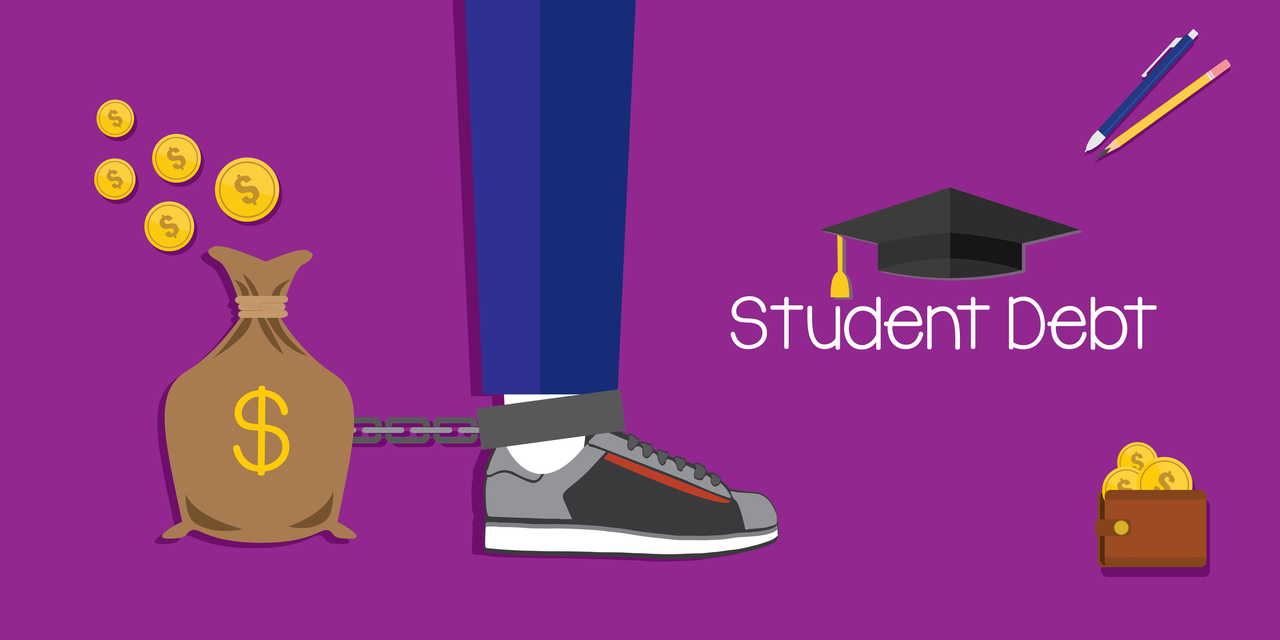
Student loan debt is a crisis in America. As of the third quarter of 2026, the New York Fed estimated U.S. student loan balances at $1.66 trillion. This unfortunate situation puts undue burden on student debt holders. "To pay off student loan debt first or to invest and save for retirement", that is the question English poet, playwright and dramatist William Shakespeare would ask, were he alive today. This is certainly the same question many student debt holders struggle with today. In this article, we opine.
Student loan interest rates vs stock market historical returns
It's hard to save for retirement, when your whole body is shackled down by student loan debt. You just can't move; it's a dilemma. To tackle this conundrum, it is wise to take a look at the average student loan interest rate and the stock market's historical returns. The fixed rates for new federal Direct Loans in 2019-20 were 4.53% for undergraduates and 6.08% for graduate students. For loans first disbursed July 1, 2026-June 30, 2027, the official fixed rates are 6.52% (undergraduate Direct Subsidized/Unsubsidized), 8.07% (graduate Direct Unsubsidized), and 9.07% (Direct PLUS). LenEDU, a website that helps consumers learn about and compare financial products, including student loans, puts the average private student loan amount at $13,780.40 (2016-2019 figure; see below).
On a different note, the stock market has historically returned an average of 10% annually, according to NerdWallet. From 1973 to 2016, the S&P 500 has returned 11.69%, according to The Balance. Past performance does not guarantee future results. Investing involves risk, including the possible loss of money. Whether to pay down a loan faster or invest depends on your interest rate, goals, and risk tolerance. Here are 4 few ways to find the money to simultaneously invest and pay down student debt.
1. Refinance and save money.
Refinance your student loans to "create" money and decrease your interest penalties. Approximate interest accrual, not your monthly payment. A person with a $50,000 student debt balance at a 7.00% interest rate is paying approximately $9.60 per day [(50,000 x 0.07) / 365.25)] or $288.00 per month in interest (9.60 x 30). Let's suppose that same person refinances for a relatively lower rate, say 5.50%. She is now paying $7.50 per day or $225.00 per month in interest. That's a saving of $63.00 per month or $756.00 per year! This newly-found money can be used towards investing. Refinancing is one option some borrowers consider. Refinancing federal loans into a private loan can mean giving up federal protections and repayment options.
2. Check your employer’s matching contribution.
A 401k is a great way to invest in the stock market and save for retirement. If your plan offers a match, check how much you need to contribute to receive it. For people who may not have access to an employer-sponsored 401k retirement account, Roth and traditional IRAs are two solid tax-advantaged alternatives. Contribute often; even the smallest amount will go a long way towards helping you improve your financial future.
3. Bargain with your student loan servicer.
"Ask, and it shall be given you." If you are trying to find that little extra money to invest, consider asking your student loan servicer to reduce your monthly payments. It doesn't hurt to ask. Some federal repayment plans can lower a required payment if you qualify, but a servicer can't simply lower it on request, and private lenders often won't. Federal repayment plan rules have changed recently, so check StudentAid.gov for the current options.
4. Get a side hustle and earn a little extra.
One of the benefits of living in America is the widespread availability of side hustles. A side hustle allows you an opportunity to earn extra money. You can use that extra money not only to reduce your student debt but also to invest and save for retirement. A very popular side hustle is driving for Uber or Lyft. Nitro has compiled a list of the 11 best side hustles to help you earn extra money.
The bottom line
Should you pay down student debt first and save for retirement later? Whereas some may advocate for paying down student loan debt as swiftly as possible, others will argue for the latter. While both approaches have advantages and drawbacks, we prefer a more balanced approach. Paying down debt and investing for retirement require considerable effort. If you follow the tips outlined above, you can decrease your student debt burden, while you significantly build your retirement nest egg.
Subscribe below to get our latest articles. Here are a few other articles you may find useful: How investors make money in the stock market | Stocks vs. index funds vs. ETFs: differences and similarities | I heeded Warren Buffett's advice. I can't stop winning | 2 simple reasons why you don't need bonds in your portfolio | 4 reasons why you should fire your broker or robo advisor.